
Content Strategy - Forest Neon Template
A content strategy deck for marketing leads who have to walk into a room and argue for doing less, better. Eight panes flip between deep forest green and pale blush, with chartreuse chips marking every fact and orchid serif landing every emotional beat. The placeholder plan belongs to Fern Supply Co., a DTC outdoor brand cutting nine channels down to two - but the skeleton underneath is any focus argument a strategist has ever had to make. Present it full-screen in the browser, export to PDF for the decision record, and render to video for the stakeholders who skim.
#What Makes This Template Stand Out
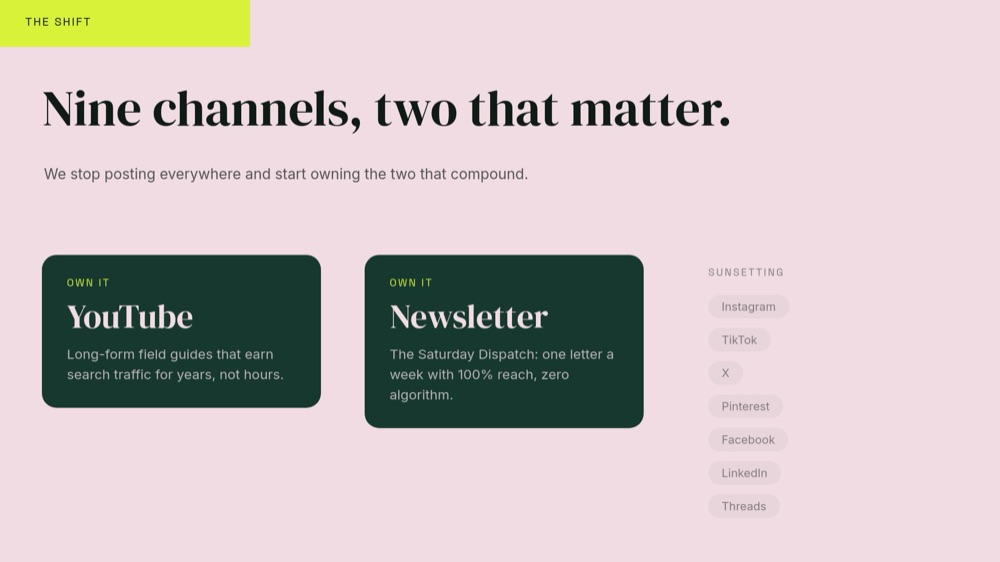
The shift pane stages the entire argument visually. "Nine channels, two that matter." runs huge in DM Serif, then two deep-forest cards labeled OWN IT - YouTube and Newsletter - sit large and confident while seven gray chips (Instagram, TikTok, X, Pinterest, Facebook, LinkedIn, Threads) fade to half-opacity under a SUNSETTING label. Nobody in the room needs the speaker notes; the layout is the decision.
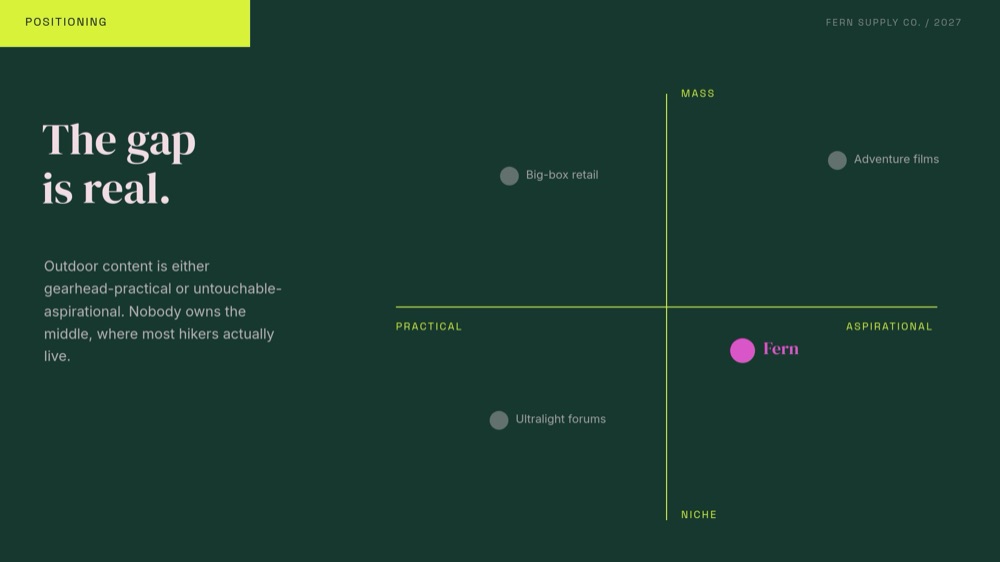
The positioning map is drawn, not pasted. Chartreuse axes - Practical to Aspirational, Niche to Mass - draw in live across the forest background, three gray competitor dots populate the quadrants, and the orchid Fern dot pops in last, exactly where the copy says nobody else is standing. It is the one pane every strategy deck needs and almost every template fakes with a static image.
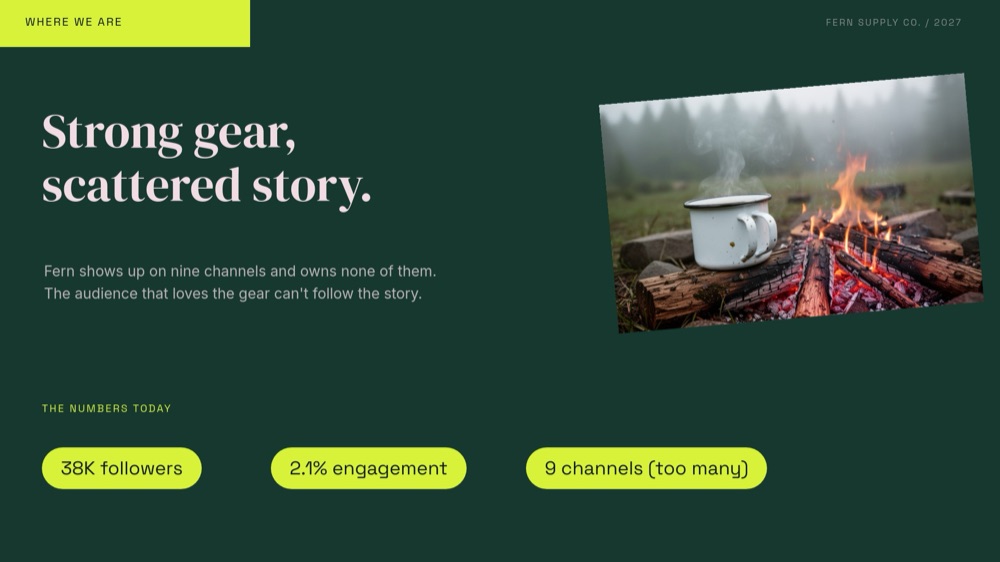
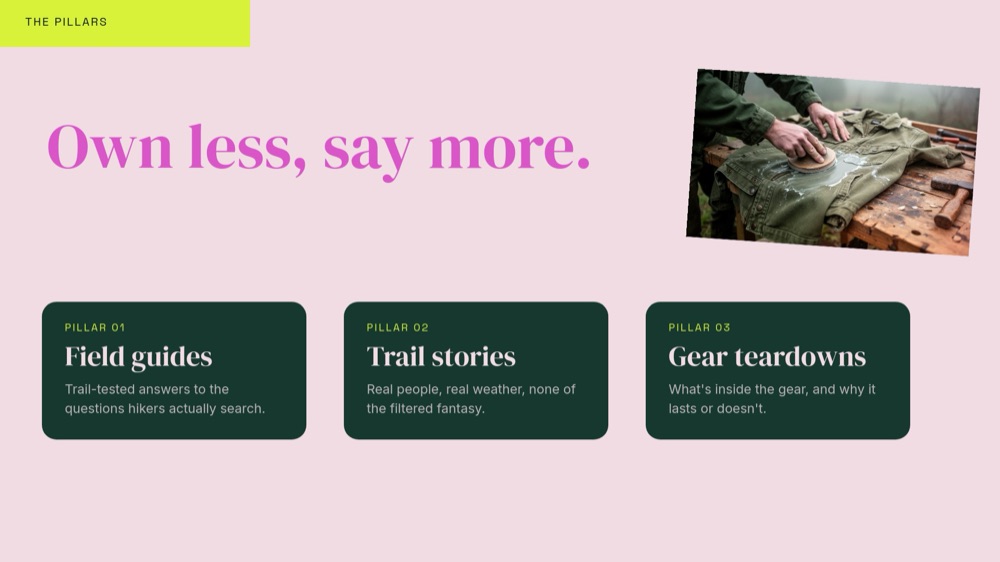
Facts and feelings get different colors. Chartreuse is reserved for labels, stat chips, and axes - "38K followers", "2.1% engagement", "9 channels (too many)" - while orchid carries the display words: the cover's "2027", the pillar pane's "Own less, say more.", the closing "Questions?". The skewed photo cards rotate a few degrees on every appearance, giving the deck a camera-subject looseness that keeps the strategy from feeling like an audit.
- Forest and blush pane alternation with DM Serif Display headlines and Space Grotesk labels
- Chartreuse chip system for every fact: section labels, stat chips, axis labels, contact lines
- Shift pane with two OWN IT channel cards and seven sunsetting chips faded to half-opacity
- Positioning scatter map with drawn chartreuse axes and an orchid brand dot that lands last
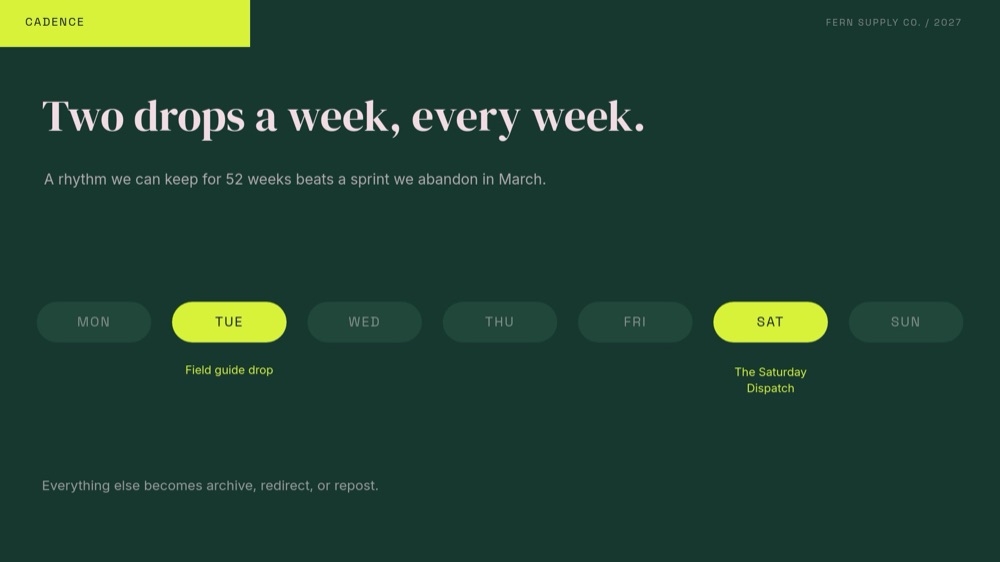
- Cadence pane with seven day-chips, two highlighted drops, and number-roll target stats
- 8-pane 16:9 arc: cover, situation, shift, positioning, pillars, cadence, targets, close
#Who Should Use This Template
- Marketing leads pitching next year's content plan to executives or a board. The deck's arc - situation, shift, gap, pillars, cadence, targets - is the exact sequence a budget approval conversation follows.
- Brand and content strategists at agencies presenting recommendations to clients. Swap Fern's numbers for the client's and the sunsetting-chips pane becomes the most persuasive slide in the engagement.
- DTC and consumer brand operators consolidating scattered channel efforts. The placeholder content is already written in your dialect - followers, engagement, revenue from content.
- Founders who own marketing by default and need a credible strategy artifact fast. The three pillar cards force the plan into nameable shapes: what you make, for whom, on what schedule.
#Best Use Cases
#Annual Content and Channel Strategy Reviews
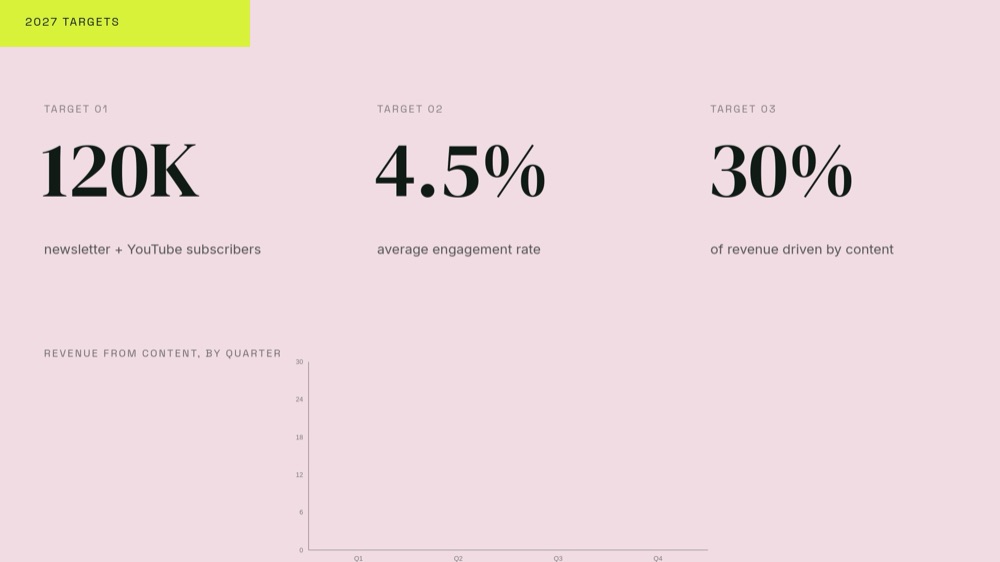
Walk leadership through the full argument in eight panes: the "Strong gear, scattered story." situation with number-roll stat chips, the channel cut, the gap on the positioning map, three content pillars, the "Two drops a week, every week." cadence, and three measurable 2027 targets backed by a quarterly ramp chart. The deck ends on "Questions?" because a strategy review that ends any other way did not land.
#Agency Strategy Deliverables
Agencies can ship this as the strategy phase deliverable of a content or brand engagement. Present it live, then publish the link so the client team can revisit the positioning map and cadence pane while executing. The chartreuse-for-facts discipline keeps client edits from degrading the system - new stats drop into existing chips.
#Internal Buy-In for a Focus Decision
Any "we should stop doing X to get better at Y" pitch fits this skeleton - sunsetting product lines, consolidating social accounts, narrowing audience segments. The two-cards-versus-faded-chips layout makes the cost of the status quo visible, and the targets pane converts the decision into numbers a CFO can hold you to.
#How to Customize This Template
- Open PaneFlow and select "Content Strategy - Forest Neon" from the template gallery
- Edit the cover - retitle "Content Strategy 2027", rewrite the one-line premise, swap the skewed photo, and put your brand in the chartreuse bar
- Update the situation pane's "Strong gear, scattered story." headline, summary lines, and the three number-roll stat chips with your current metrics
- Rework the shift pane: rename the two OWN IT cards and their one-liners, and edit the sunsetting chip list to the channels you are cutting
- Relabel the positioning map axes, rename the three gray competitor dots, and reposition the orchid dot where your brand stands
- Rewrite the three pillar cards under "Own less, say more." with your content formats and their one-line promises
- Set your publishing rhythm on the cadence pane - highlight the active day-chips and label each drop - then enter your real targets and quarterly chart values
- Update the closing contact lines and presenter name, then present in the browser, export to PDF, or render to video for async stakeholders
#Related Templates
- Agency Proposal - Gradient Italic - the proposal deck that wins the engagement this strategy deck delivers
- Creative Agency Deck - Magazine - an editorial agency deck for when the work itself is the argument
- Brand Guidelines - Brand Book - the system document that follows once the strategy is approved
- SaaS Pitch - Minimal - a quieter deck skeleton for metrics-first software pitches
#Related Resources
- PaneFlow for Marketers - strategy decks, campaign reports, and channel plans with motion built in
- PaneFlow for Content Creators - the creator-side toolkit for the channels this deck commits to
- PaneFlow vs Gamma - how PaneFlow compares to Gamma for designed, animated strategy decks
Start with Content Strategy - Forest Neon
Open this template in PaneFlow, customize it to match your brand, and export as HTML, React, Vue, or video.